Brides name peonies unprompted, and florists build whole spring calendars around the harvest. Photographers push hardest of all. A peony flower bouquet reads on camera the way almost nothing else does: dense, layered, soft from every angle, with no flat spot for the lens to catch. The catch lives in the calendar and the invoice. Peonies bloom on their own schedule, cost more than almost any mainstream stem, and will not grow anywhere tropical. Order for the wrong week or the wrong latitude and you pay double for half the flower. Season, stem price, color behavior, transport, and destination sourcing each follow a few firm rules. Learn them before you place the order and the flower cooperates. Skip them and you learn from the florist's substitution clause instead.
Why Peonies Own the Wedding Market
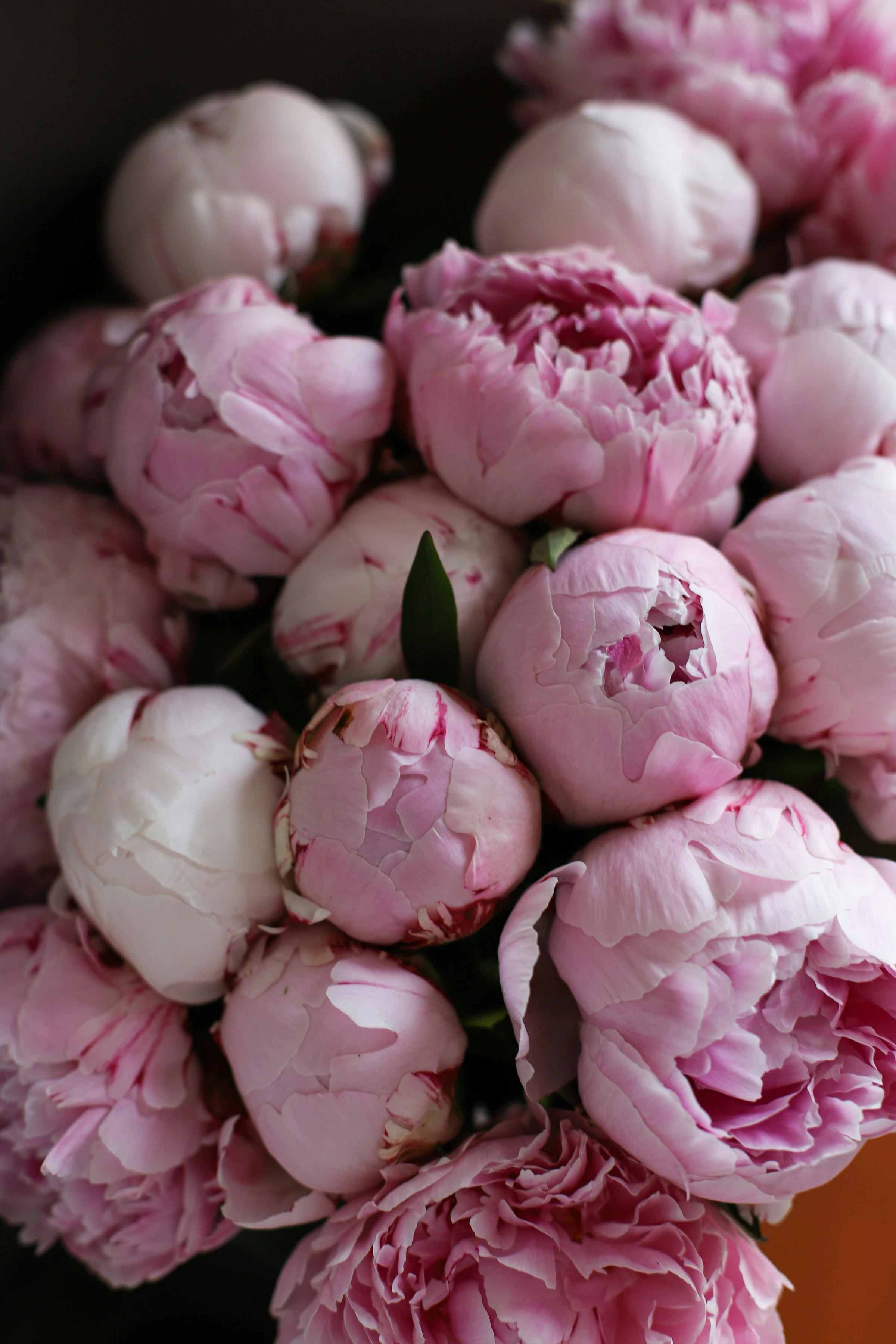
Four to eight inches. One open peony covers that span, and the number does most of the selling. A rose head opens to barely three, so a bouquet that takes thirty roses to look full hits the same weight with ten to fifteen peonies, and the finished piece photographs as one continuous mass of petals instead of a grid of separate heads. Florists call the trait face value. No mainstream cut flower carries more of it.
Thin, crumpled, ruffled at the edges, the petals catch light without stiffness. Sarah Bernhardt and Festiva Maxima add a rose-like scent strong enough to register during vows yet quiet at a dinner table. Bomb-type varieties such as Red Charm stack petals into a solid dome; semi-doubles like Coral Charm stay looser and show their gold centers. Pick the form to match the mood: domes for formal rooms, semi-doubles for garden settings.
Symbolism finishes the sale. In China the flower is mudan, the king of flowers, a Tang court favorite that still fills wedding art as shorthand for honor and wealth. Victorian floriography filed it under romance and a happy marriage, and the twelfth anniversary belongs to it outright. Hand over a peony bouquet and the message needs no card.
Peony Season: The Window You Are Working With
Late April opens the season; the last week of June closes it. Between those dates the harvest moves north like a weather front: California cuts first, Oregon, Washington, and the Midwest carry May, and by late June the lower 48 have nothing left in the field. No region holds the relay long, a few weeks each before the handoff. Alaska runs on a separate clock. Cold springs hold its fields back until July, so Alaskan farms carry the midsummer weddings the rest of the country cannot.
Everything else is import season or substitute season. From November through February the supply flips hemispheres: Chile and New Zealand cut through their summer, the trade calls it counter-season product, and the stems land here at roughly double the spring price. A February 14 proposal can hold real peonies for exactly that reason. Dutch greenhouses patch pieces of early spring. What no budget fixes are March, April, September, and October, the gaps between the two hemispheres, when even wholesalers come up empty. So a florist promising cheap, abundant peonies for an early-October date owes you one answer before the deposit: where do the stems come from?
Substitutes That Photograph Like Peonies
Real stems missing, or the quote too high? Four flowers come close enough:
- Garden roses, Juliet and Piano above all: cupped heads packed with petals that pass for peonies in any photo shot from more than a few feet away, at $6 to $10 a stem.
- Ranunculus, the large Italian Cloni line especially: the same papery, layered build at a smaller scale. Three to five heads in a cluster stand in for one peony.
- Double tulips, sold as peony tulips, Angelique the standard: wide and ruffled in April, a month before true peonies start.
- Dahlias, Café au Lait first among them: the September and October answer, peaking exactly as peony supply collapses.
Mix two of these with a smaller count of imported peonies and the flower bill drops by a third while the silhouette holds.
Choosing a Color: What Each Shade Signals
Shade first, variety second. A bloom this large sets the tone of every photo it enters, so the color answers to the setting and the light on the day, not to the palette board pinned six months earlier.
| Color | Common Varieties | Traditional Meaning | Best Fit |
|---|---|---|---|
| Blush pink | Sarah Bernhardt, Mons. Jules Elie | Romance, tenderness | Classic weddings, engagement shoots, anniversaries |
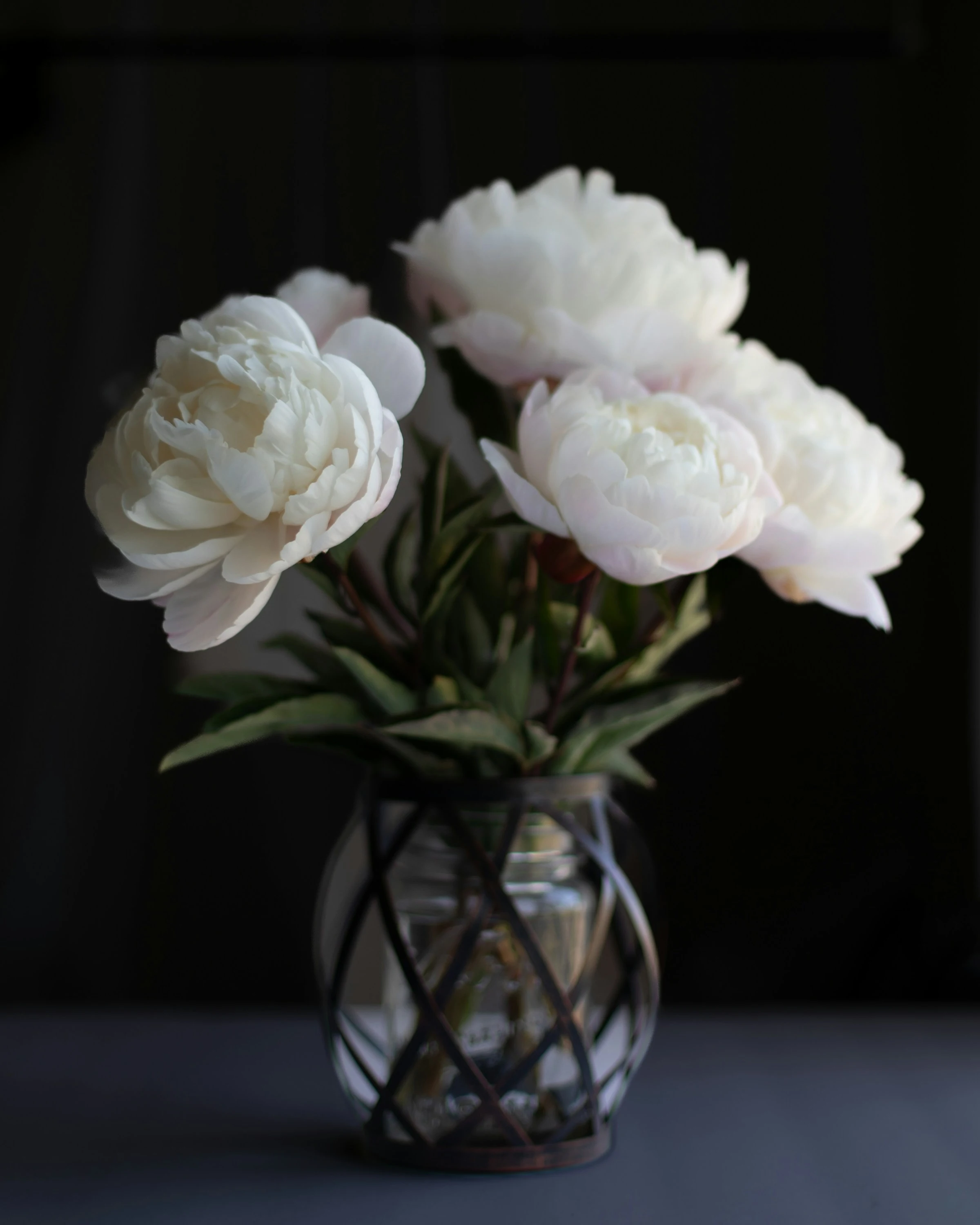
| White and ivory | Festiva Maxima, Duchesse de Nemours | Purity, new beginnings | Formal ceremonies, coastal and minimalist weddings |
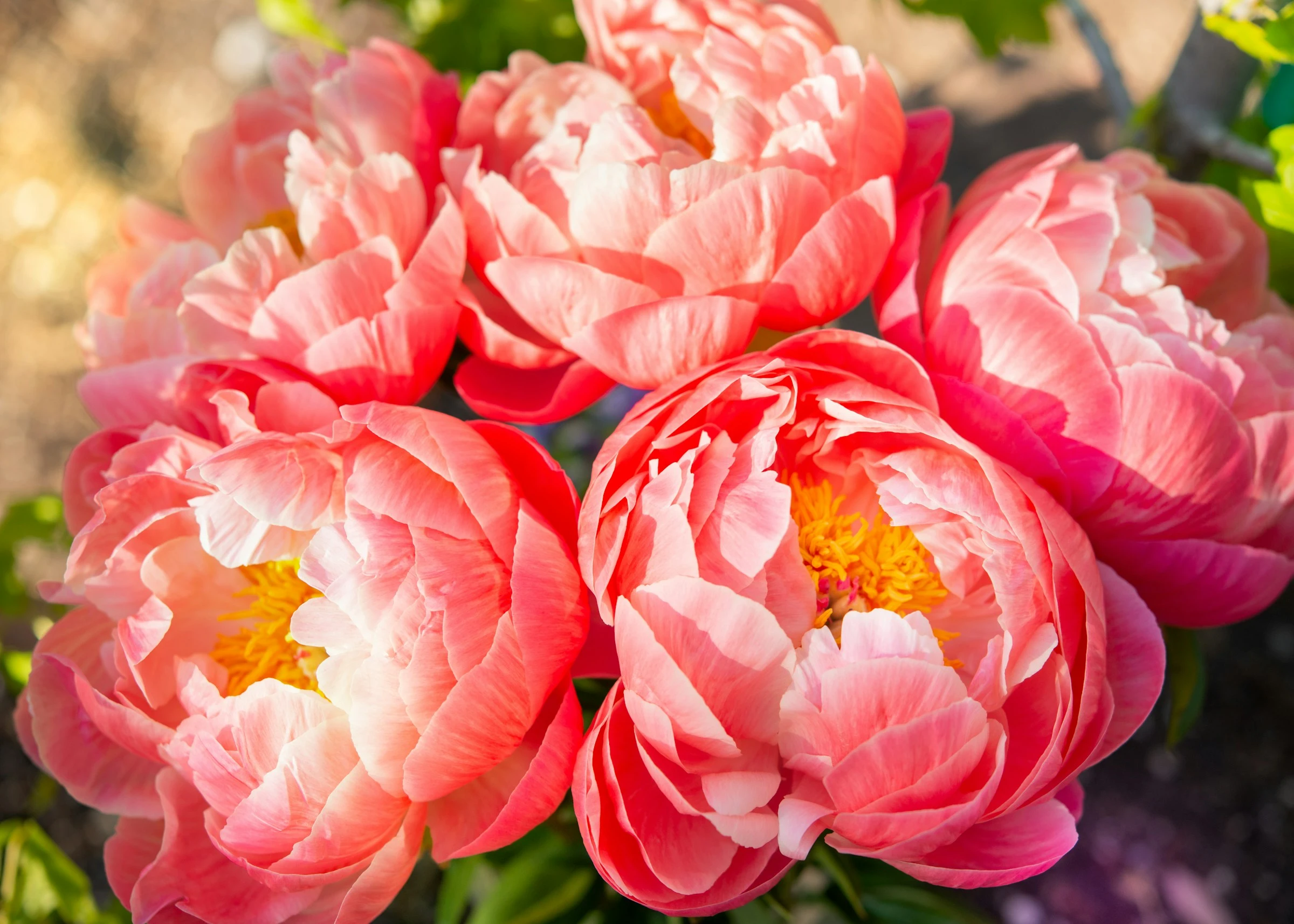
| Coral | Coral Charm, Coral Sunset | Warmth, energy | Beach weddings, summer parties, honeymoons |
| Deep red | Karl Rosenfield, Red Charm | Passion, prosperity | Winter weddings, Valentine's proposals, Lunar New Year events |
One warning on coral. Coral Charm opens a saturated orange-pink, then fades over two to three days through peach to cream. Florists exploit the fade for ombre work, but if ceremony photos need that punch, the stems must arrive no more than a day or two out. Red runs the opposite problem: the color holds, the heads run smaller, so budget two or three extra stems to match the fullness of a blush bouquet.
Sourcing Peonies for a Destination Wedding
Tropics and peonies do not mix. Setting buds takes a real winter, weeks of cold below 40 degrees, and no beach in Cabo, Tulum, Hawaii, or the Caribbean ever gets one. So nothing grows locally, and whatever a resort shop sells has crossed at least two transfer hubs with a day lost at each. Heat finishes what the flight started: at 85 degrees an open peony sheds petals within hours. The workaround is geographic. Couples based in Southern California order a peony flower bouquet from a Los Angeles florist for the welcome dinner and the engagement shoot at home, where June stems come straight off nearby farms, then hand the ceremony site to what thrives there anyway: bougainvillea and orchids. Planners call the arrangement the home-side and destination-side split. On price it beats forcing imports through a resort florist; on quality the gap runs wider.
When the destination bouquet must be peonies anyway, one route works: a local florist with a wholesale import account, booked four to six weeks ahead, stems flown cold chain two days before the event. Expect double the domestic rate and a substitution clause, because customs holds kill flower shipments without warning. Ask whether the shop has landed peonies at that exact location before. A yes with photos from a past job outranks any quote.
A Real Ordering Scenario, Step by Step
Wedding on June 14 in Cabo San Lucas, welcome dinner on June 6 in Los Angeles:
- Early April. Confirm June 14 sits inside domestic season. Book the LA florist for the dinner: 40 stems of blush Sarah Bernhardt for two table runners plus a small hand-tied bouquet.
- Mid April. Call two Cabo florists. One has never imported peonies; the other quotes $22 per stem for Chilean or Dutch product on a two-day lead. Approve 15 stems for the bridal bouquet only, garden roses as the fallback.
- Late May. Reconfirm both orders. The LA shop locks $9 per stem at peak harvest; Cabo confirms the import slot.
- June 4. LA stems arrive in bud, hold at 36 degrees, and open on schedule for the dinner.
- June 12. Peonies land in Cabo, rest overnight in the cooler, and get arranged the morning of the 14th to peak at the 5 p.m. ceremony.
Peony spend: about $360 home-side, $330 destination-side. Running every Cabo arrangement on imports would have passed $900.
Peonies on a Romantic Getaway
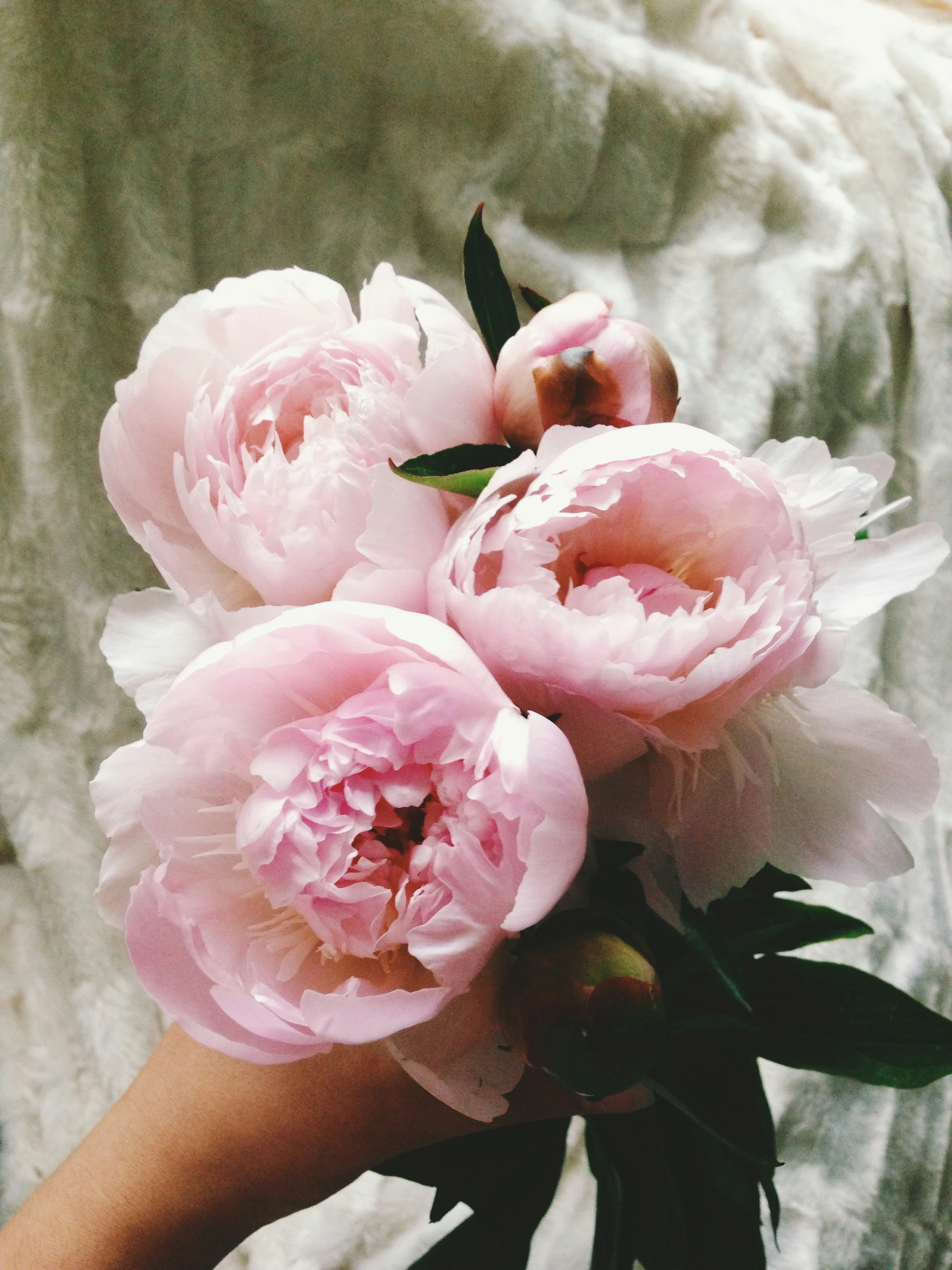
Not every trip involves an aisle. For anniversaries and proposals the flowers land in a hotel room, and the concierge beats any courier app at getting them there. Call the property three or four days ahead and order through the floral vendor the hotel already uses: that driver knows the loading dock, and the front desk knows that driver. Time the drop for two to three hours before check-in. Buds keep opening while the room stays cool, and you walk in on a bouquet at its peak. Proposing on a beach or in a park instead? Buy the bouquet in bud a day early. Overnight it sits in the minibar fridge, stems in a water glass, cold enough to stall the bloom. Take it out 60 to 90 minutes before the question and the heads open on cue.
Yes, the bouquet flies home with you. TSA clears fresh flowers through carry-on security; water fails the checkpoint, stems do not. So the morning of the flight, drain everything. Each cut end gets a florist water tube, the four-inch kind that holds less than an ounce, or a wet paper towel under a twist of foil. Through the scanner the bundle goes upright in a paper sleeve, and on board it rides on the floor under the seat in front of you. The overhead bin is where bouquets die: somebody's duffel lands on the heads five minutes into boarding. An international return adds one step. Cut flowers face agriculture inspection at customs, so mark them on the declaration form and let the officer decide; skipping the box risks a fine, ticking it costs a minute at the inspection table. By car the whole problem shrinks to one rule. Box the bouquet on the floor behind the passenger seat and keep the air conditioning running. A trunk in summer sun climbs past 120 degrees, and no airline treats peonies that badly.
What Peonies Cost and Why
The price is agronomy, not markup. Three to five years pass between planting a peony root and the first commercial cut, and the plant multiplies slowly too: new stock comes from dividing mature roots, a few divisions per plant. After the wait, each stem pays out one bloom per year, hand-cut over roughly three weeks before the farm goes quiet until next spring, and every stem then rides the cold chain at about 34 degrees from field to wholesaler to shop. A rose greenhouse pushes a fresh flush every six to eight weeks, all year. Set the two production lines side by side and the table below stops looking like markup.
| Item | In Season (May to June) | Off Season (Imported) |
|---|---|---|
| Single stem, retail | $8 to $15 | $15 to $30 |
| Bridal bouquet, 12 to 15 stems | $250 to $450 | $400 to $700 |
| Bridesmaid bouquet, 5 to 7 stems | $95 to $160 | $150 to $250 |
| Centerpiece with peony focal blooms | $120 to $250 | $200 to $400 |
| Garden rose stem, for comparison | $6 to $10 | $8 to $14 |
The bill bends in two places. Demote the peony from recipe to headline: five heads at $12 apiece put $60 of actual peony into the bouquet, ranunculus and spray roses close the gaps at half the stem price, and the finished piece reads nearly as lush for about 60 percent of the all-peony number. Or move the date instead of the flowers. A bouquet quoted at $650 for mid-October runs $350 in the first week of June. Identical recipe, cheaper month.
Handling and Timing on the Day
Squeeze the bud. Peonies sell at what florists call the marshmallow stage: soft under light thumb pressure, like the candy, often with a first crack of petal color at the tip. A bud that firm opens in 24 to 48 hours at room temperature. One that feels like a golf ball got cut too tight and often stays shut for good, so hand it back to the driver. Set arrival for two days out, open the stems in water at 65 to 70 degrees, then hold the finished pieces at 34 to 38 degrees until a few hours before guests arrive.
Behind schedule? Water at 100 degrees plus a bright room forces a stubborn bud in six to eight hours, and florists in a genuine rush swish the whole head in lukewarm water to loosen the petals. The brake works as well as the gas: wrapped dry, a refrigerator parks an unopened bud for a week, sometimes two. Heat during the event stays the one problem without a fix. Direct sun at 90 degrees strips an open peony bare in two to three hours, so outdoor-ceremony bouquets wait boxed in shade until the processional, and the tossed-petal photos go early in the timeline, not last.
Skip the peony boutonniere. The smallest open head still spans three to four inches against the two a lapel handles, and with no water source behind the pin it sheds petals down a jacket front by cocktail hour; wire a spray rose or a ranunculus there instead. Peonies pay off where they stand in water. Recut each stem at an angle, change the water daily, and a bloom holds five to seven days, past the wedding weekend and, for couples who drive home, into the first days of the honeymoon. One placement rule: keep the vase off the kitchen counter, because ripening bananas and apples leak ethylene and the gas ages an open peony overnight. Garden cutters get an extra chore. Ants farm the sugary film on peony buds, so shake or dunk every head at the door before the colony rides indoors with the bouquet.
FAQs
Are peonies in season for a summer wedding?
For June, yes, and at the year's best prices: that month is the domestic peak. July and August belong to Alaska, where a cool season and twenty-hour daylight push the harvest into midsummer and grow some of the largest heads on the market. Two to three weeks of notice gets Alaskan stems through most wholesalers at a modest markup over spring rates, so a late-July wedding carries real peonies without the import surcharge.
What happens if peonies are unavailable for my date?
Three paths. Chilean and New Zealand imports cover November through February at about twice the in-season price. Juliet garden roses paired with clustered ranunculus copy the shape for any date. Or hand the focal role to the season's own star: dahlias in fall, double tulips in early spring.
How many stems does a bridal bouquet need?
Twelve to fifteen for a full peony bouquet, up to eighteen for an oversized cascade. A mixed design gets by on five to seven peonies as focal points, with roses, ranunculus, and greenery filling out the rest. Red varieties carry smaller heads, so add two or three stems for Karl Rosenfield or Red Charm.
Will peonies hold up through a full event day?
Yes, with the timing handled. Stems delivered at marshmallow stage two days out, opened at room temperature, and refrigerated until the ceremony look their best all day. Prolonged direct heat is the one threat, so shade the bouquet between photo sessions at outdoor summer events.
What are the best peony colors for a beach wedding?
Coral, blush, and white. Coral Charm matches sunset light and stays vivid in glare, blush reads soft without washing out, and ivory types like Duchesse de Nemours suit linen-and-sand ceremonies. Deep red photographs heavy in strong sun; save it for evening or winter.
Conclusion
Plan, and the flower cooperates. Improvise, and it sends the bill: a harvest that lasts about three weeks on any single farm, years of growing behind every stem on the invoice, and a flat refusal of tropical heat, the trait that splits destination weddings into home-side and destination-side halves. Three decisions carry the rest. Put the date inside or near the May-to-June window if the calendar bends at all. Settle the recipe early, full peony or five focal heads in a mixed design at 60 percent of the price. And book the florist three to six weeks out with proof in hand, photos from a past job in your exact setting, an LA welcome dinner or a Cabo import slot. Get those three right and the bouquet in the photos matches the one you pictured the day the planning started.