How Interior Design Choices Shape Comfort in Coastal Homes
Coastal homes are often defined by their connection to the surrounding environment. Ocean views, natural light, and open layouts create a sense of escape that many people associate with relaxation and comfort. However, the long-term livability of a coastal home depends not only on its location, but also on thoughtful interior design decisions that support both comfort and durability.
Among these decisions, wall treatments and interior materials play a particularly important role. Walls form the largest continuous surfaces inside a home, influencing how spaces feel, how light behaves, and how well interiors withstand the unique conditions found near the ocean.
The Coastal Environment and Interior Comfort
Homes near the coast are exposed to a combination of environmental factors that differ from inland properties. Increased humidity, strong sunlight, salt air, and fluctuating temperatures all affect how interior spaces age over time. Materials that perform well in dry or mild climates may behave differently when exposed to coastal conditions.
Interior design in coastal homes must balance visual lightness with resilience. Comfort is not just about aesthetics—it is also about how spaces feel after years of use, seasonal changes, and environmental exposure.
Walls as a Defining Element of Coastal Interiors
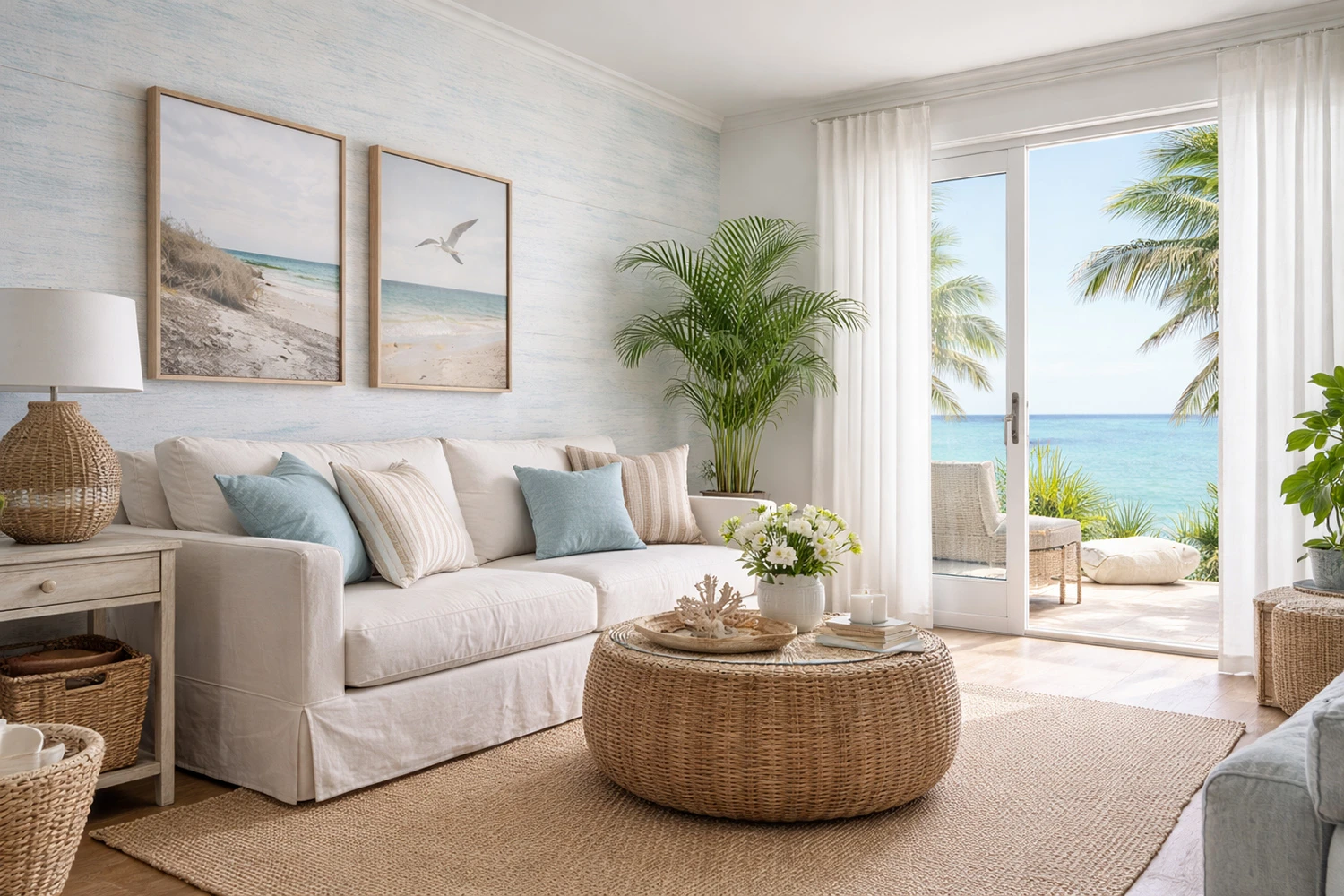
Walls serve as both a visual backdrop and a functional surface. Their texture, color, and finish influence how a room feels throughout the day. In coastal homes, walls often reflect natural light coming from large windows and open doors, amplifying brightness and creating an airy atmosphere.
Light-toned finishes help enhance openness, while subtle textures introduce warmth and depth without overwhelming the space. When walls are treated thoughtfully, they support a calm, cohesive interior rather than competing with views or architectural features.
Because walls occupy such a large visual area, even small material choices can significantly affect how comfortable and balanced a space feels.
Material Selection for Coastal Conditions
Choosing interior materials for coastal homes requires careful consideration of how they will respond to humidity and sunlight. Some materials may expand, contract, or discolor over time if they are not suited to these conditions.
Natural textures are often favored in coastal interiors because they complement the surrounding landscape. However, their performance depends on proper preparation and compatibility with the environment. Materials that breathe well and tolerate moisture fluctuations tend to age more gracefully in coastal settings.
Thoughtful material selection helps prevent common issues such as peeling, warping, or uneven aging, all of which can detract from long-term comfort.
Surface Preparation and Long-Term Performance
While surface preparation is rarely visible once a project is complete, it plays a critical role in how wall finishes perform. Coastal homes often experience subtle structural movement due to temperature and humidity changes, making proper preparation even more important.
Uneven substrates, previous coatings, or moisture exposure can all affect how finishes adhere and age. Addressing these factors early helps ensure visual consistency and structural stability over time.
Coastal interiors that look refined years after completion usually share one common trait: careful attention to preparation beneath the surface.
Light Interaction and Atmosphere
One of the defining features of coastal homes is their relationship with light. Sunlight reflects off water and sand, creating bright and dynamic lighting conditions throughout the day. Interior wall finishes directly influence how this light is experienced indoors.
Smooth surfaces reflect light evenly, enhancing brightness and clarity. Subtle textures scatter light, reducing glare and creating softer transitions between highlights and shadows. This interaction can significantly affect comfort, especially in living areas and bedrooms where harsh light may feel overwhelming.
By selecting finishes that work harmoniously with natural light, coastal homes maintain a relaxed atmosphere even during peak daylight hours.
Durability Without Compromising Aesthetics
Comfort in coastal interiors depends on durability just as much as visual appeal. High-traffic areas, vacation rentals, and second homes often experience periods of intense use followed by inactivity. Materials must be able to handle both conditions without deteriorating quickly.
Durable wall treatments reduce the need for frequent maintenance and help interiors retain their original character. This is particularly important in coastal homes, where ongoing upkeep can become costly and time-consuming if materials are poorly chosen.
Design choices that prioritize both beauty and performance support long-term comfort rather than short-lived visual impact.
Craftsmanship and Execution
Even the most suitable materials depend on proper application. Precision in alignment, seam control, surface tension, and finishing details determines how refined a wall treatment appears and how well it performs over time.
In coastal interiors designed for long-term use, this is why many homeowners reference insights from experienced wall finishing professionals when evaluating how material behavior, surface preparation, and environmental conditions influence performance and longevity. Understanding these factors early helps avoid issues that may only become visible after months or years of exposure.
Maintenance and Everyday Living
Interior comfort extends beyond initial design. Wall finishes continue to influence daily living through their response to cleaning, humidity, and wear. Materials that are easy to maintain help preserve both appearance and functionality.
In coastal homes, regular ventilation and appropriate cleaning methods play an important role in extending the life of interior surfaces. Choosing finishes that tolerate gentle cleaning and environmental exposure supports a comfortable living experience without constant upkeep.
Creating Cohesive Coastal Interiors
Successful coastal interiors feel unified rather than assembled. Walls, furnishings, lighting, and architectural elements work together to create a balanced environment. Wall finishes provide continuity, allowing other design elements to stand out naturally.
When wall treatments are chosen thoughtfully, they support a sense of calm and cohesion that defines comfortable coastal living. Rather than drawing attention to themselves, they enhance the overall experience of the space.
A Long-Term Perspective on Coastal Comfort
Trends in coastal design may evolve, but the principles behind successful interiors remain consistent. Comfort comes from material integrity, thoughtful preparation, and finishes that respond well to their environment.
By treating interior design decisions as long-term investments rather than short-term trends, coastal homeowners can create spaces that remain comfortable, resilient, and visually appealing for years to come—homes that feel as good to live in as they look on arrival.