The Reason Kenya Should Be Your Next Holiday Destination: The Guide of a First-timer.
Whether it is safaris every world-renowned or immaculate beaches, here is why Kenya is the first destination on the list of your traveling spots.
Destinations can be those places that you go, but there are destinations that can transform you into the manner in which you perceive the world. Kenya strongly belongs to the second category. It is a nation that provides the scenes that most travellers have never imagined in nature programming a lioness roaming through golden grass at dawn, a million wildebeest racing across a river, a humpback breaching off the shore. Kenya however is much more than its wildlife. It is a destination of unbelievable geographic diversity, cultural heritage and a friendliness of hospitality that surprises first time visitors to the extent.
Kenya is the dream destination in case you want to take a trip which is both adventurous and relaxing and which will also provide an experience of the authentic culture of Kenya. This will be a step-by-step guide on why it must be your next holiday destination and how to begin planning.
The Wildlife There's Nothing Else Like It.
Let's start with the obvious. Kenya has to be among the best wildlife spots on planet earth and the documentary footage cannot train you on how to look at it on the ground. The nation hosts the big five; lion, leopard, elephant, rhino, buffalo among hundreds of other mammal species and more than 1,100 bird species. The Maasai mara national reserve is the unquestioned crown jewel as the great migration of more than two million wildebeest, zebra, and gazelle takes place between July and October as they cross through the Tanzanian Serengeti into the grass lands of the Masai mara. It is usually ranked as one of the best wildlife spectacles in the world.
But the Mara is only the beginning. The Amboseli National Park provides iconic scenes of the herds of elephants that are outlined on the snow-white top of the mountain Kilimanjaro. The lake Nakuru is known to have flamingo populations and has been considered one of the best locations in Africa to see the black rhinos and the white rhinos. Far north, Samburu National Reserve is the home of rare species that you will not see elsewhere in Kenya as well as the reticulated giraffe, the Grevy zebra and the gerenuk which is an antelope that stand on its hind legs to browse on the trees.
The Kenya Wildlife Service (KWS) is the administrator of the national parks in Kenya; it is in charge of conservation of over 50 parks and reserves. The cost of entry to each park differs, and it can be paid via eCitizen by your tour operator.
Beaches that are Among Some of the Best in the World
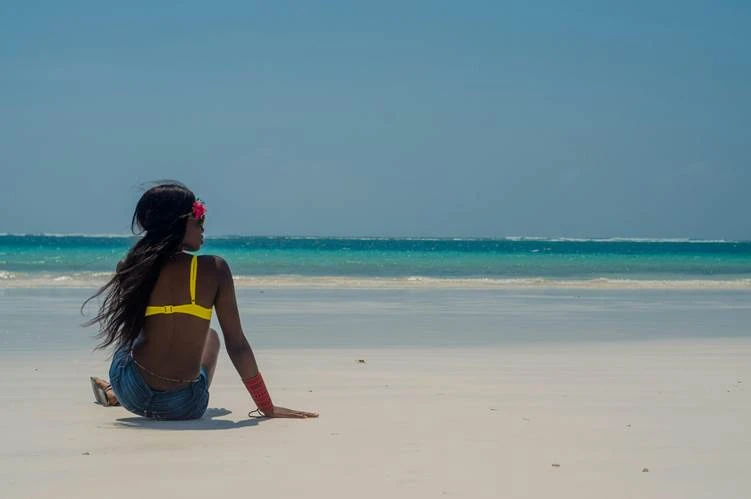
The Indian Ocean coastline of Kenya covers a distance of more than 500 kilometres and is fronted with white sand beaches, coral reefs, and beautiful Swahili coastal towns. South of Mombasa is Diani Beach, which is constantly selected as one of the best African beaches, it is powdery white sand, turquoise water, palm trees gently waving without the crowds you would have in Southeast Asia or the Caribbean. Farther north, Watamu, is a marine national park, with the finest snorkelling and diving, as well as the opportunities to swim with whale sharks between March and October.
Lamu is next; another UNESCO World Heritage site, as well as one of the oldest continually inhabited Swahili communities in East Africa. Lamu Old Town is a labyrinth of narrow lanes, carved wooden doors and building made of coral stone hundreds of years ago. The island has no automobiles; the main means of transport are the donkeys and the old-fashioned dhow boats. It is like time traveling and it is an experience that lingers with you even after you are gone.
African Safari Visitors to Kenya often add a few days in the Mara or Amboseli with some time in the bush, a few days in the sand, on a bush-and-beach safari holiday.
A Cultural Tapestry At no place in history.
Kenya is a country which harbors over 40 different ethnic groups, each possessing its own language, traditions and customs. Maasai people are also the most recognisable their red shukas and beads work which is the most notable, but there is much more to the culture than just a single tribe. The Samburu, Turkana, Kikuyu, Luo, Swahili, and numerous other communities all add up to a rich cultural landscape that is diverse, lively and very hospitable to tourists.
The cultural tourism in Kenya is becoming increasingly fast. The guests have the opportunity to stay in community-owned conservation areas that have direct positive impact on the local people, visit the homesteads, get educated on the native land management systems, and engage in cultural rituals. It is not performative tourism and most of these programmes are created and operated by the communities themselves giving them a direct economic advantage without damaging the cultural heritage.
Even Nairobi, in its turn, is a cultural giant. The food business in the city is on fire, the art galleries and music bars thrive, the Nairobi National Museum and the Karen Blixen Museum are all insightful locations to have a glimpse of the history of the country. And Nairobi does have a national park in its city limits, which is why it is the only capital city in the world to have one-- you can actually see giraffes with the skyline of the city behind them.
Beyond the Game Drive Adventure.
Kenya is not only a sit in the car place. The attractions are unbelievable. The second tallest mountain in Africa is Mount Kenya with 5,199 metres and it provides strenuous high altitude hiking by bamboo forest, moorlands and glacial habitat. With proper preparation, the hiking to the heights of point Lenana (4,985m) can be done by fit and well-prepared hikers and the mountain views are among the best the continent has to offer.
Kenyan coast has got the best in diving and snorkelling, deep-sea fishing, kitesurfing in Diani, and sailing in traditional dhows, all to water lovers. There is white water rafting along the Tana River and its tributaries. And to those who like their adrenaline rush on the ground, cycling and mountain biking safaris are becoming among the popular activities in conservancies around the Mara and Laikipia.
One of the most typical experiences in Kenya is hot air ballooning over the Masai Mara in the morning. The fact that you can drift silently past masses of wildebeest and zebra when the sun has risen beyond the horizon is what makes the whole journey very worth the effort. The bush being of course after taking the form of most ballooners a champagne breakfast.
It Is More Accessible Than You Think.
Among the most significant myths concerning Kenya is the fact that it is hard or costly to travel. Factually, the Kenya tourism infrastructure is fully developed, English is an internationally used language (one of the two official languages alongside Swahili) and accommodation facilities are of all varieties, including the simple camping sites and the highest-end safari lodges. Electronic travel authorisation (eTA) system of the country facilitates easy acquisition of a visa and the Jomo Kenyatta International Airport in Nairobi has good connectivity to most of the global hubs.
There are many variations in the cost of safari according to luxury and the season. Group camping Safari is available to those who travel on a budget at a very small portion of the price of a personal luxury Safari, and self-drive safari is found in most of the parks to those that are of adventurous nature. Kenyan Shillings have also been found to be very favorable to Europeans, Northern Americans, and Australasians.
When to Go
Kenya is a destination throughout the year, but timing is an issue based on what you wish to sight. The dry seasons, between January and March, and July and October are the months that can be regarded as the most favorable ones to see wildlife as the animals cluster around the water sources, and the bushes are thinner, thus being more visible. The river crossings of the Migration in the Mara are usually done during the months of July and October.
It is the green season (April-June and November) and it is also raining so that the prices are low, the number of tourists decreases, all the landscapes are green, and one can watch birds very well. November to March are the warmest and driest months and hence the best times to visit the coast.
Getting Started
The suitable approach of planning a Kenya trip is to collaborate with an expert operator who is familiar with the country. A skilled operator will plan your itinerary based on your interests, financial means and the time of the year you want to go and all the logistics are taken care of, accommodation, internal flights, park fees, guides and transfers. Majestic Kenya Safaris will also provide an assortment of designed safari tours and completely customized tours with first-time and returning customers.
Be it a wildlife lover, a beach, a culture or an adrenaline junkie Kenya will not leave you without something to take home. Most first-time visitors can only regret that they did not come earlier.